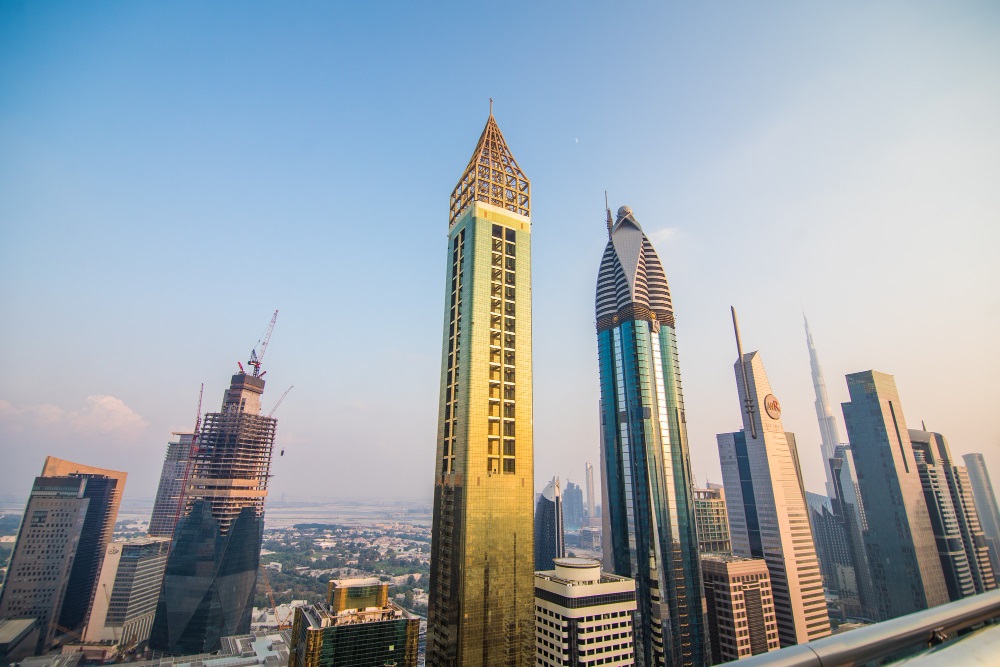
Surge as Skyline – and Salaries – Soar
Dubai has never been a city to think small. In 2025, its skyline is reaching even higher—but it’s the talent beneath the towers that is making the biggest noise. With billions flowing into new developments and a fresh wave of foreign investment reshaping the real estate sector, demand for property professionals has risen sharply across the emirate.
From British-trained chartered surveyors to tech-savvy marketing managers, the hunt for skilled personnel in Dubai’s property market is both broad and urgent. And unlike the inflation-bitten job markets of London or Berlin, the Gulf’s most dynamic city is offering not just salaries, but opportunity, speed, and a tax-free future.
According to the Dubai Land Department (DLD), the first half of 2025 saw over AED 525 billion in property transactions, up 15 per cent on the previous year and a new benchmark for the region. Behind these figures lies a surge in employment across sales, valuation, development, planning, asset management and facilities operations. As Dubai pushes forward with its Urban Master Plan 2040, this is shaping up to be not only the decade of the skyline—but of the skilled workforce behind it.
Where Ambition Meets Demand
There is no mistaking the mood in the city’s property corridors. A glance at job portals reveals a relentless demand for professionals across the board. Developers such as Emaar, Damac, Sobha and Azizi have all expanded hiring operations, while international agencies like Knight Frank, CBRE and Savills are racing to secure brokers, project managers and investment analysts.
Recruitment specialists report that more than 6,000 live property vacancies exist across the UAE, the majority of which are concentrated in Dubai. These include roles for RICS-accredited valuation surveyors, urban planners, LEED-certified sustainability consultants, digital marketing executives, facilities managers, and—unsurprisingly—off-plan sales agents, whose earning potential continues to rise alongside property prices.
“Dubai is facing a human capital crunch in real estate,” says one senior recruiter at a Gulf-based executive search firm. “There’s no shortage of capital, no shortage of buyers. What we lack is qualified, internationally-minded professionals to manage the scale of growth.”
The Engine Behind the Boom
Dubai’s latest property upswing is not an isolated spurt of speculative building. It is part of a coordinated national strategy to reshape the city over the next two decades.
The Urban Master Plan 2040, launched by the government, outlines the expansion of five major urban centres, including Downtown, Dubai Marina, Dubai Silicon Oasis, Expo City and Dubai Academic City. These hubs will require new homes, roads, schools, logistics parks, shopping zones and cultural spaces—all of which need to be designed, funded, sold and operated by people.
Compounding this is the emirate’s rapid population growth. As of May 2025, Dubai’s official population surpassed 3.8 million, up from 3.5 million the year before. Government forecasts anticipate nearly 6 million residents by 2040, placing significant pressure on urban infrastructure and property supply. According to consultancy Knight Frank, housing demand is currently outpacing construction by more than 15,000 units per annum.
This all translates into jobs—and not just at the top. From graduate entry schemes to director-level mandates, property professionals at every level are being pulled into the vortex.
Dubai’s Property Job Market in 2025
While brokerage still commands the headlines, Dubai’s 2025 hiring trends are far more nuanced. Here’s how the employment landscape is evolving across key sectors:
Development & Project Management: With major schemes in Dubai South, Jumeirah Village, and Ras Al Khor under construction, developers are looking for experienced project leads capable of managing consultants, securing permits, controlling costs and hitting handover deadlines. Salaries range from AED 45,000–70,000 per month, often with annual bonuses based on unit delivery and occupancy targets.
Valuation and Asset Advisory: The rise in cross-border investment has led to a spike in demand for RICS-certified professionals. CBRE, JLL and Savills are among those seeking valuation analysts, asset managers and financial modellers with experience in discounted cash flow analysis, feasibility studies and yield calculations.
Urban Planning & Masterplanning: As Dubai moves towards a more sustainable, people-centric urban vision, demand for RTPI-accredited planners and urban design specialists has risen sharply. This includes roles in transport planning, land use regulation, and community engagement.
Facilities Management (FM): Every property built must be run. FM providers like Emrill and Farnek are hiring MEP engineers, lifecycle costing analysts, and soft services managers to maintain large mixed-use communities like Dubai Hills Estate and MBR City. These roles offer salaries of AED 18,000–35,000, depending on scope and certification.
Sales & Brokerage: Off-plan remains Dubai’s engine. Developers are constantly onboarding sales agents, often on commission-only packages that can exceed AED 100,000/month for top performers. A RERA licence is mandatory, and fluency in multiple languages—particularly Russian, Mandarin, and Arabic—is increasingly preferred.
Marketing, CRM & PropTech: Developers and agencies are investing heavily in digital marketing, automation and CRM platforms. Salesforce and HubSpot administrators, multilingual content creators, and paid social campaign managers are now integral to real estate lead generation. Entry salaries begin around AED 20,000, with seasoned strategists earning twice that.
Graduate Entry and Global Mobility
Unlike many global cities, Dubai is actively recruiting property graduates. Employers such as Nakheel, Damac, Aldar and Dubai Properties offer structured graduate training schemes, rotating candidates through sales, finance, delivery and FM departments.
Recent graduates with RICS-accredited degrees, urban planning qualifications, or construction management diplomas are finding ready access to entry-level roles with strong training and career progression. Many employers also cover visas, housing allowances, and flights.
In a market defined by ambition, the path from graduate to senior manager can be traversed in under five years—a timeline unheard of in Europe or North America.
The Licensing Landscape
Compliance and licensing have become crucial in Dubai’s maturing property ecosystem. Regulatory frameworks are tightening under the oversight of Dubai’s Real Estate Regulatory Agency (RERA) and the Dubai Land Department (DLD).
All sales agents must obtain a RERA certification before legally transacting. International professionals in valuation, FM and construction are advised to obtain industry-recognised credentials, such as:
RICS (for valuation and investment professionals)
RTPI (urban planners and zoning specialists)
LEED, BREEAM or WELL (green and sustainable building consultants)
CIOB (construction management and project delivery)
Trust signals matter. Employers increasingly prioritise verified credentials and international accreditation when assessing candidates—especially for director-level roles or those involving regulatory compliance.
A Word on Working Culture
While the salaries are appealing and the lifestyle seductive, property jobs in Dubai are not for the faint-hearted.
Performance culture is strong. Sales roles come with targets that must be met. Development roles often demand six-day weeks, long hours and high-pressure timelines. Project overruns are not tolerated lightly. And despite legal frameworks improving, not all employers offer generous contracts—particularly in commission-based positions.
But the upside, for those who can deliver, remains unmatched. Tax-free income. Quick promotion. Career mobility. And an international network of colleagues working on some of the world’s most ambitious property projects.
The International Comparison
How does Dubai fare on the global property jobs stage in mid-2025?
London: While still a global capital, London’s property job market is sluggish, bogged down by tax hikes, rent caps, and political uncertainty. Salaries are strong, but after-tax earnings fall well behind Dubai’s.
Singapore: Offers career structure and safety, but rising costs and stricter work visa regulations have made it less accessible. Entry-level packages struggle to match Dubai’s tax-free appeal.
Saudi Arabia: Mega-projects such as NEOM and Qiddiya offer sky-high salaries, but lifestyle limitations and long rotations deter many foreign professionals.
Australia: A mature and regulated environment with excellent urban planning careers—but cost of living and a cooling market mean job availability has narrowed.
In 2025, Dubai sits uniquely at the crossroads of tax efficiency, urban ambition, job fluidity and economic growth. No other market offers quite the same combination.
Financial Infrastructure and Market Tools
Dubai’s property sector is increasingly institutional in tone. Professionals are now expected to operate within a framework of financial tools and analytics, including:
Argus Enterprise: Used widely for asset valuation
Salesforce/HubSpot: For managing buyer and lead data
Power BI/Tableau: Employed by investment teams to visualise deal flow
ESG scoring models: Integrated into project assessments for major developers
Verified agents now frequently work with independent valuation platforms such as Property Monitor and DXBinteract, which provide up-to-date pricing indices, rental trends, and transaction records. These tools form part of the modern toolkit for both residential and commercial property professionals.
Outlook: A City That Hires as Fast as It Builds
There are few guarantees in global real estate, but Dubai in 2025 is as close to one as it gets. The city is developing, yes—but more importantly, it is professionalising. It is not simply a destination for quick wins, but a hub for long-term careers.
For property professionals seeking an international post with real earning potential and rapid progression, Dubai represents a strategic move. Whether you’re RICS-certified in London, a construction manager in Cape Town, or a CRM strategist in Mumbai—there’s likely a role with your name on it.
The only question that remains: are you ready to build your future here?
Financial Disclaimer:
The information provided in this article is for general informational purposes only and does not constitute financial advice. While every effort has been made to ensure the accuracy of the content, market conditions may change, and unforeseen risks may arise. The author and publisher of this article do not accept liability for any losses or damages arising directly or indirectly from the use of the information contained herein.
Copyright 2025: property-jobs.agency
Picture: freepik.com